A customer in Glossop contacted me to restore the solid oak worktops and dining table in their kitchen and dining area.
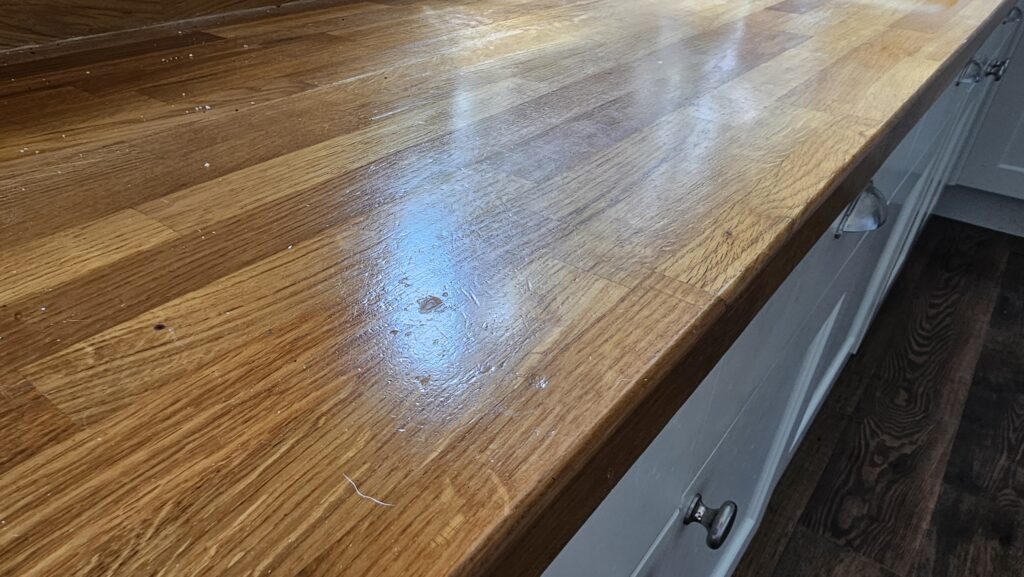
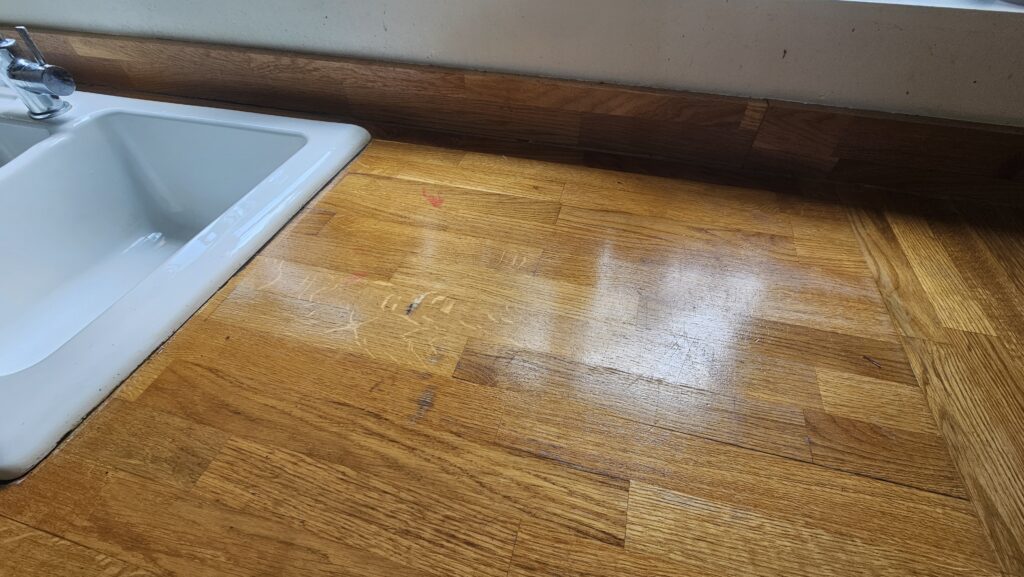
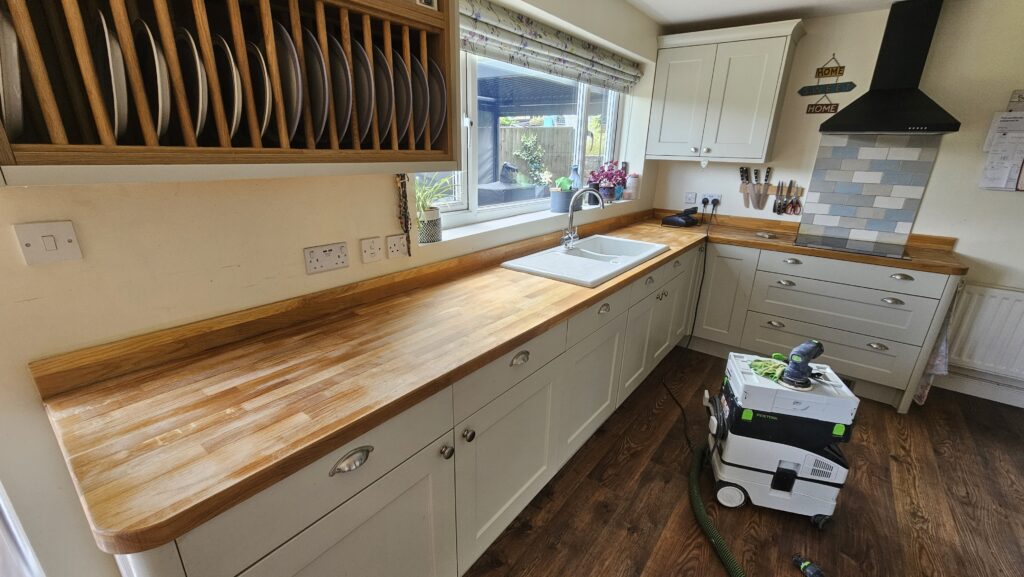
Although the timber was still structurally sound, years of daily use had left the surfaces looking tired and uneven. The kitchen worktops had visible scratches, small dents, paint marks, dark stains and several cloudy white patches where the original protective finish had broken down.
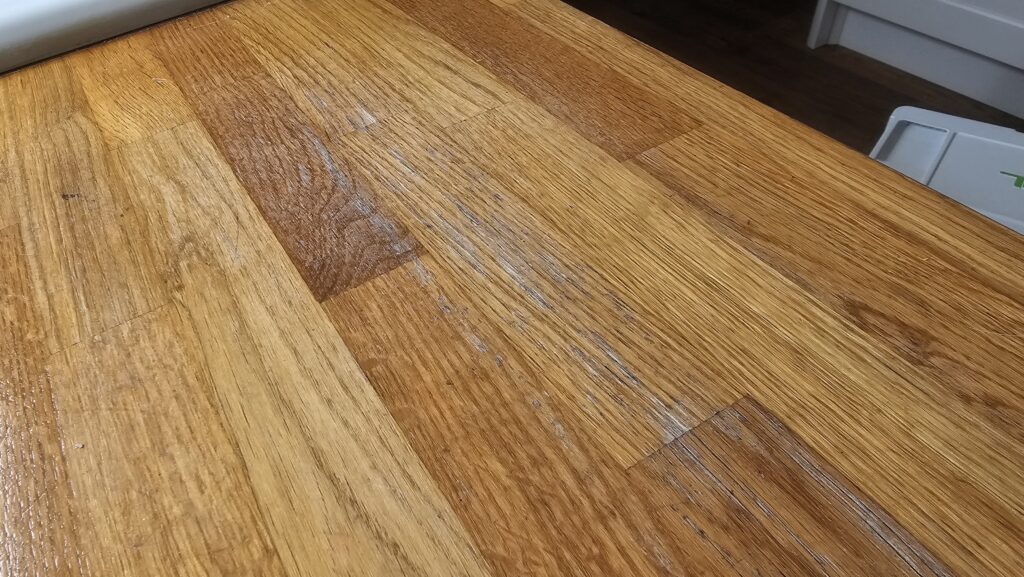
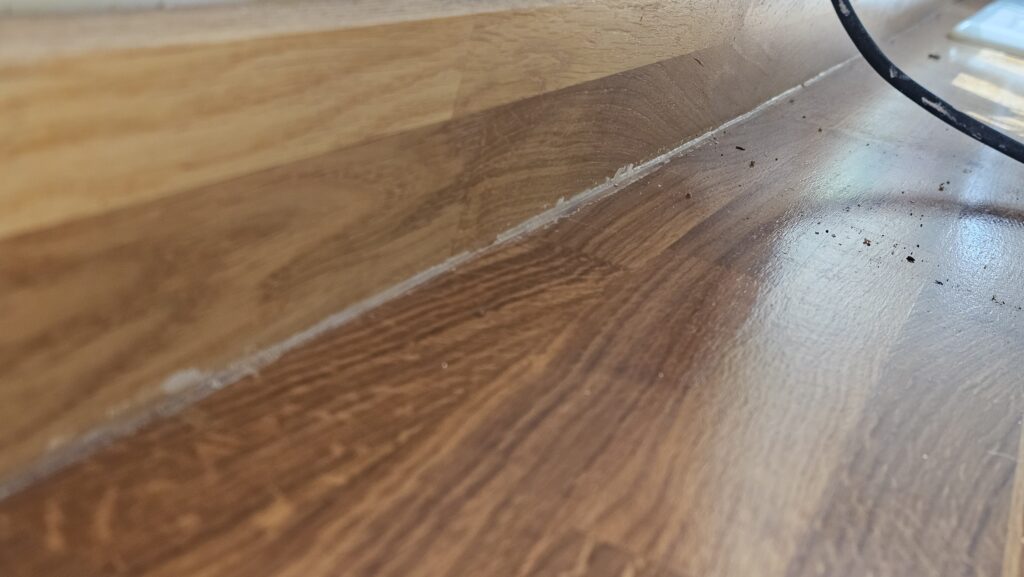
The silicone sealant around the rear edge of the worktop had also become old and discoloured, while the dining table had suffered from sun bleaching, white patches and black marks caused by regular use.
Why Restore Instead of Replace?
Solid oak can often be restored many times during its lifetime.
Careful sanding removes worn coatings, light scratches and many surface marks. A fresh protective finish then brings back the natural colour and grain.
Restoration usually costs much less than replacing good-quality timber. It also avoids throwing away a worktop or table that is still structurally sound.
You can also view our kitchen worktop installation project
Preparing the Solid Oak Worktops
I first inspected each section and identified the areas that needed extra attention.
Next, I removed the deteriorated silicone sealant. This gave me clear access to the timber along the joints and rear edge.
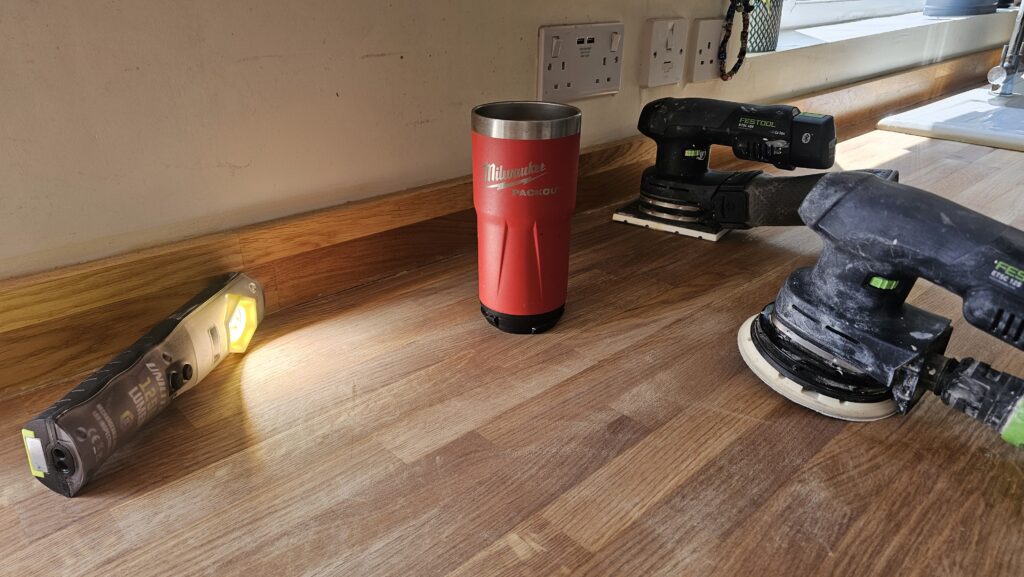
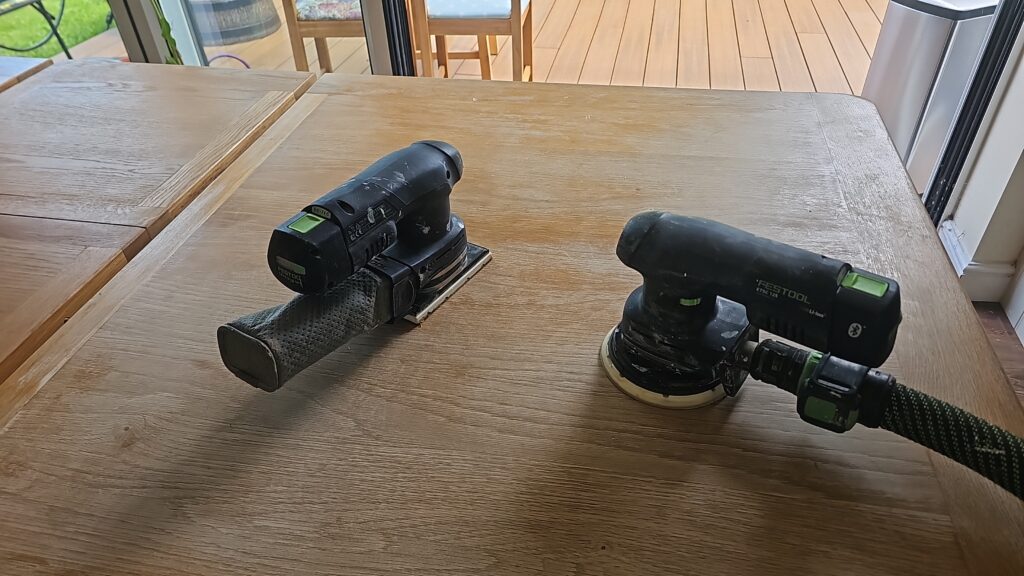
I then used professional Festool sanders with dust extraction to remove the old coating and surface damage. Several grades of abrasive created a clean and even surface without removing unnecessary timber.
High-CRI inspection lighting helped me spot scratches, shiny patches and small imperfections that normal kitchen lighting could easily hide.
Refinishing the Worktops
Once the old finish and surface marks had been removed, the worktops were thoroughly vacuumed and cleaned to remove all remaining dust.
A fresh hard wax oil finish was then applied in thin, even coats. Hard wax oil enhances the natural colour and grain of oak while providing practical protection against moisture, spills and everyday kitchen use.
The old sealant was also renewed to create a clean finish and help protect the timber around the rear joints and sink area.
Restoring the Solid Oak Dining Table
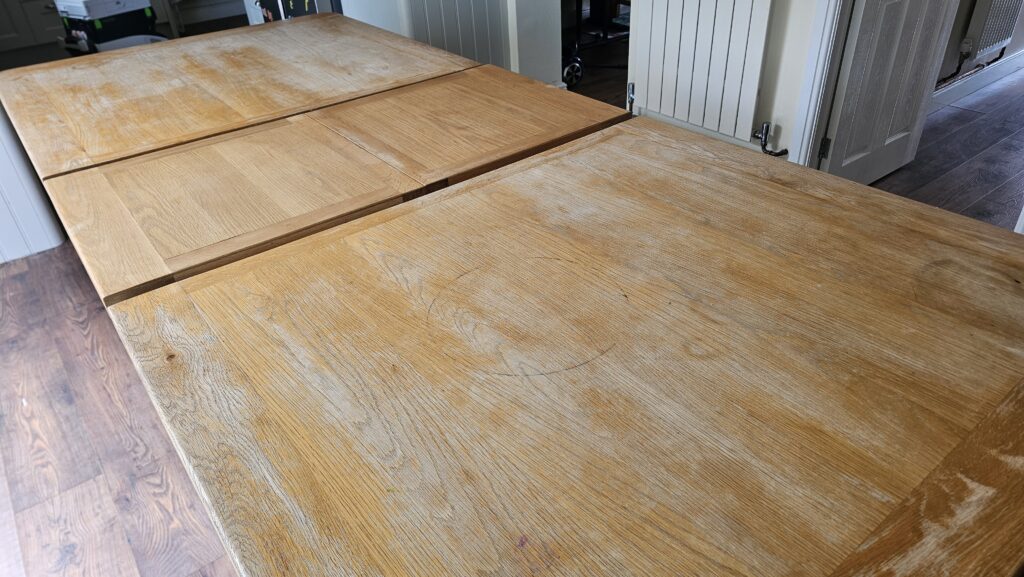
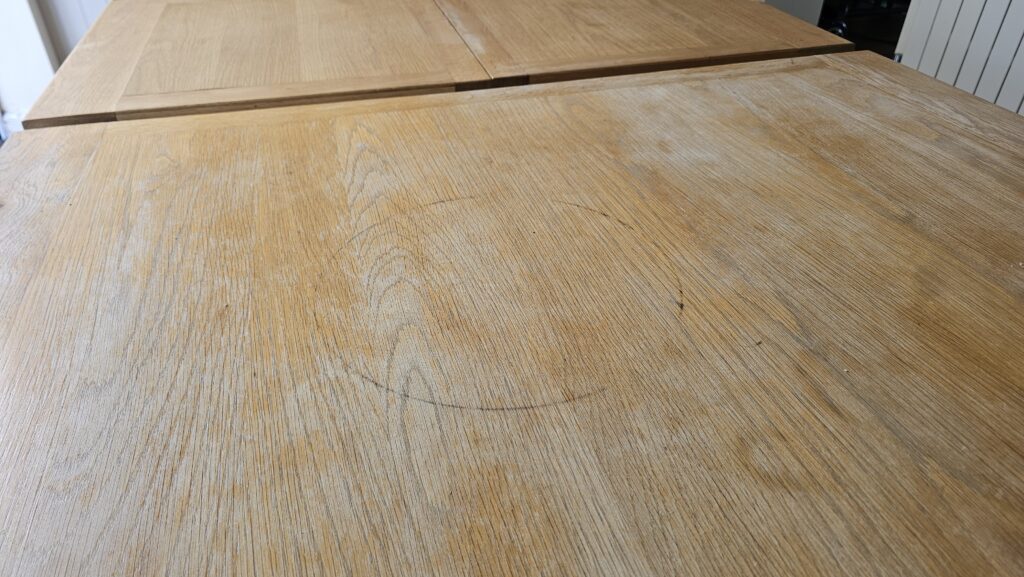
Years of direct sunlight had faded the dining table and created uneven white patches. Everyday use had also left scratches and dark marks across the surface.
I carefully sanded the tabletop back while preserving its original edges and shape.
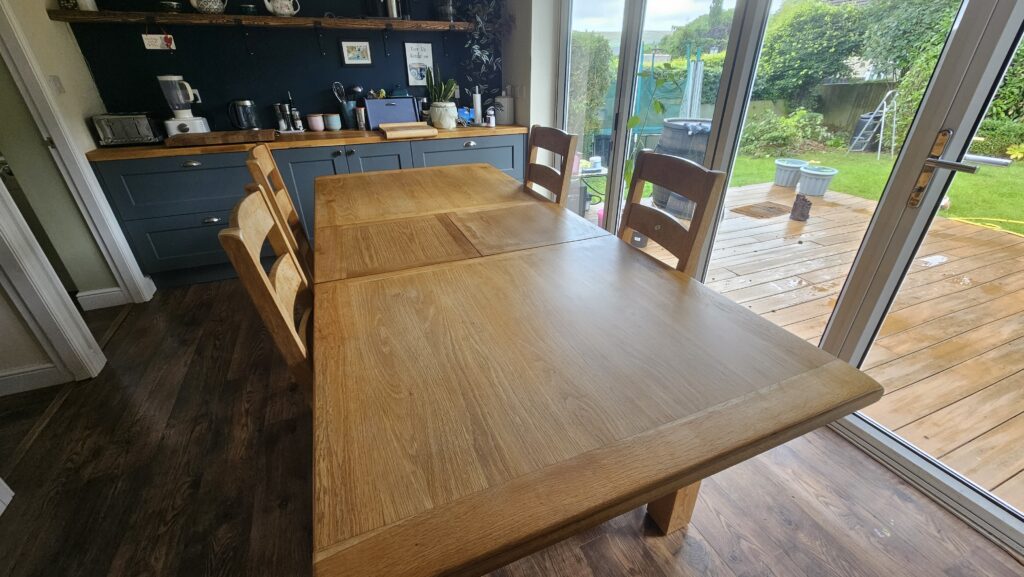
After preparation, I applied hard wax oil to restore the warm oak colour. The finish also made the natural grain much clearer and gave the table renewed protection.
Applying the Hard Wax Oil Finish
After sanding, I vacuumed the worktops thoroughly and removed the remaining fine dust.
I then applied thin, even coats of hard wax oil. The finish enhanced the natural oak grain and added practical protection against moisture, spills and everyday use.
Finally, I applied fresh silicone sealant along the rear joints and around the necessary edges. This created a cleaner appearance and helped protect the timber from moisture.
The Finished Result
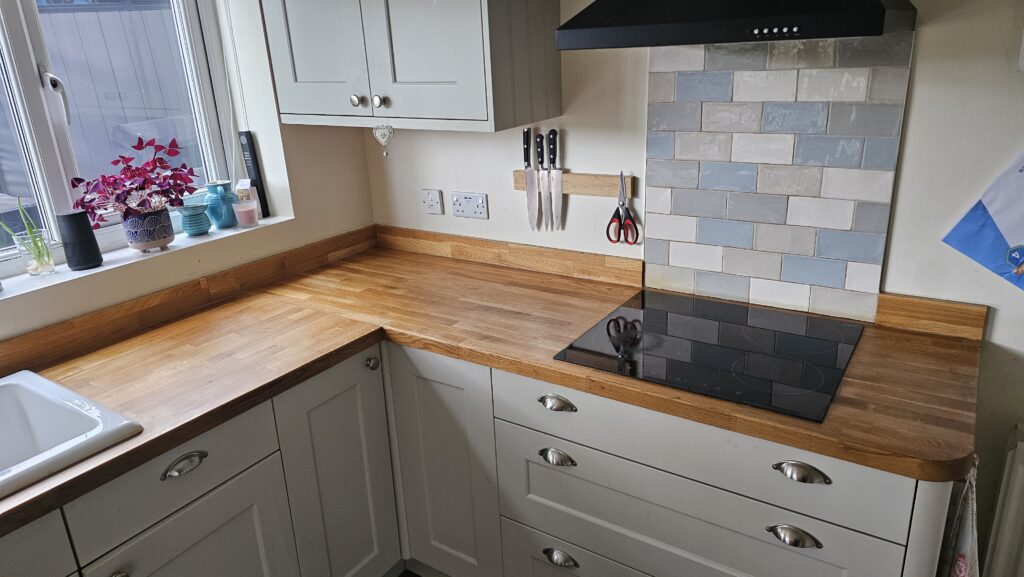
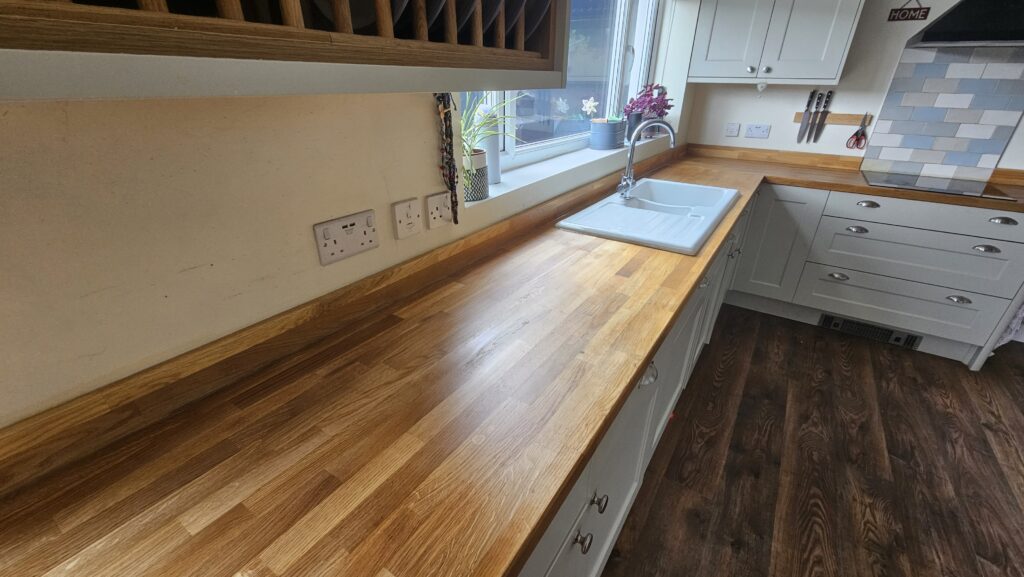
The restoration completely refreshed both the kitchen worktops and dining table.
Sanding removed or greatly reduced the scratches, paint marks, white patches and worn areas. The new finish brought back the warmth and character of the oak.
The customer kept the original solid timber and avoided the cost and disruption of replacement.

Need Your Solid Wood Worktops Restored?
TAB Bespoke Interiors provides solid oak worktop restoration, worktop sanding, dining table restoration and hard wax oil refinishing in Glossop, Greater Manchester and surrounding areas.
Get in touch for a quotation if your wooden worktops or furniture look scratched, faded, stained or worn.