
Here’s a recent timber floor repair where dark marks had developed under a dining table and chairs.
The issue
Over time, the protective pads under the metal table and chair legs had worn down. This meant the metal feet were making direct contact with the timber floor. With everyday use — and a bit of moisture in the mix — the marks gradually turned into dark stains along the grain.
There was also a separate area near the balcony door where long-term sunlight had faded the surface finish, leaving the boards looking pale and dry compared to the rest of the room.
What I did
To improve the appearance and protect the floor going forward, I carried out a targeted repair rather than sanding the entire room:
- Isolated and marked out the affected area
- Carefully sanded back the damaged finish in stages
- Blended the repair into the surrounding boards so the colour transition looked natural
- Refreshed the protective finish to even out the sheen and add durability
- Replaced the worn furniture pads to help prevent the marks returning
Result
The dark marks were significantly reduced and the repaired section now blends much more evenly with the surrounding floor. The finish looks refreshed, and with new pads fitted under the furniture, the floor is far better protected for day-to-day use.
Quick prevention tip
If you’ve got timber floors, it’s worth checking chair and table pads every few months. Once the pads wear through, metal feet can quickly leave marks — especially in areas where moisture or frequent movement is involved.
If you’ve got similar floor marks or worn finishes that need attention, feel free to get in touch.
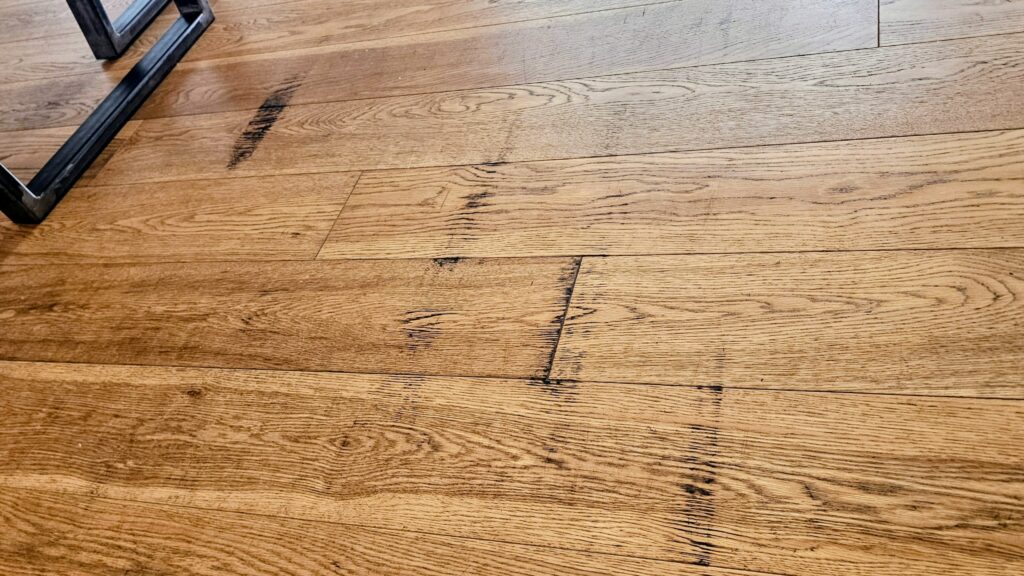
Before: Worn furniture pads meant metal legs were contacting the timber floor, creating dark marks over time.
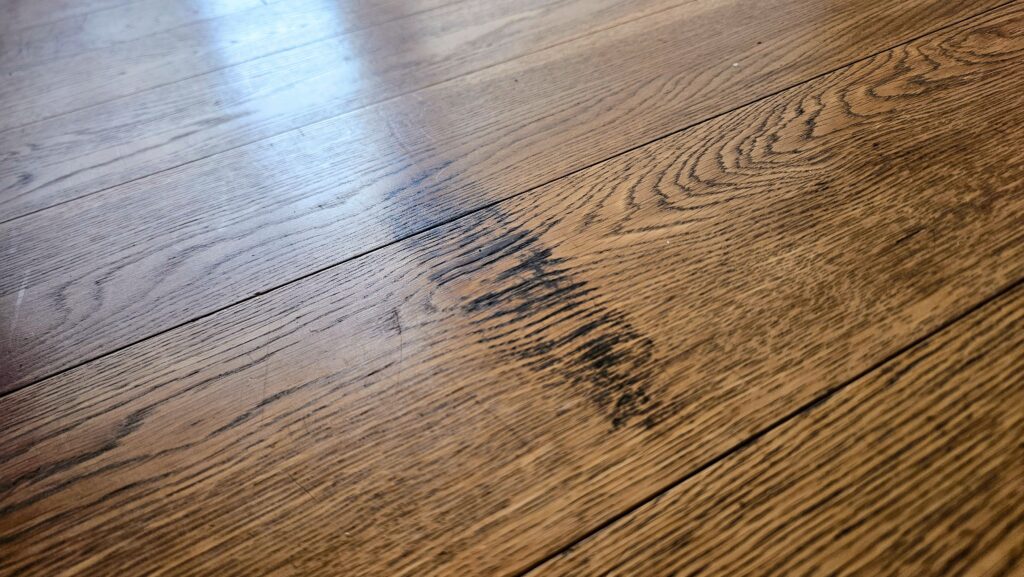
Before (close-up): Staining had started to track along the grain from repeated movement and moisture.
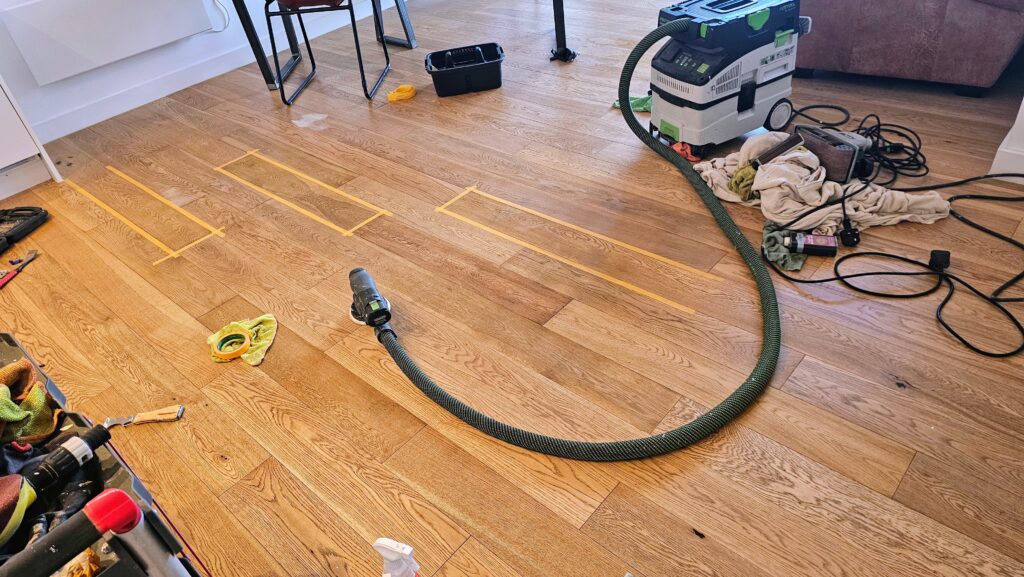
Setup: Dust extraction and careful prep help keep the work clean and the finish consistent.
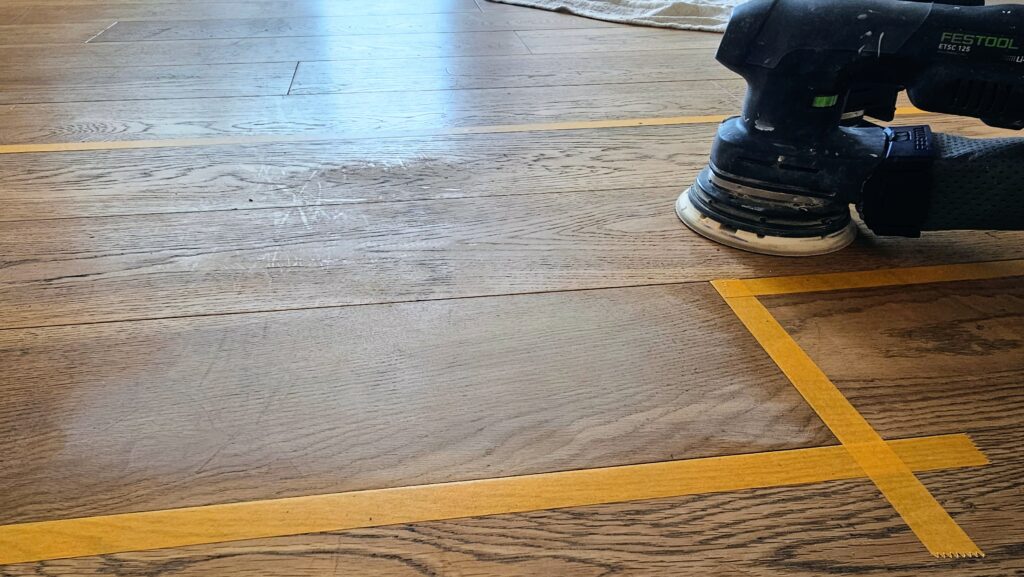
Process: Sectioning the area and sanding in stages to blend the repair into the surrounding boards.
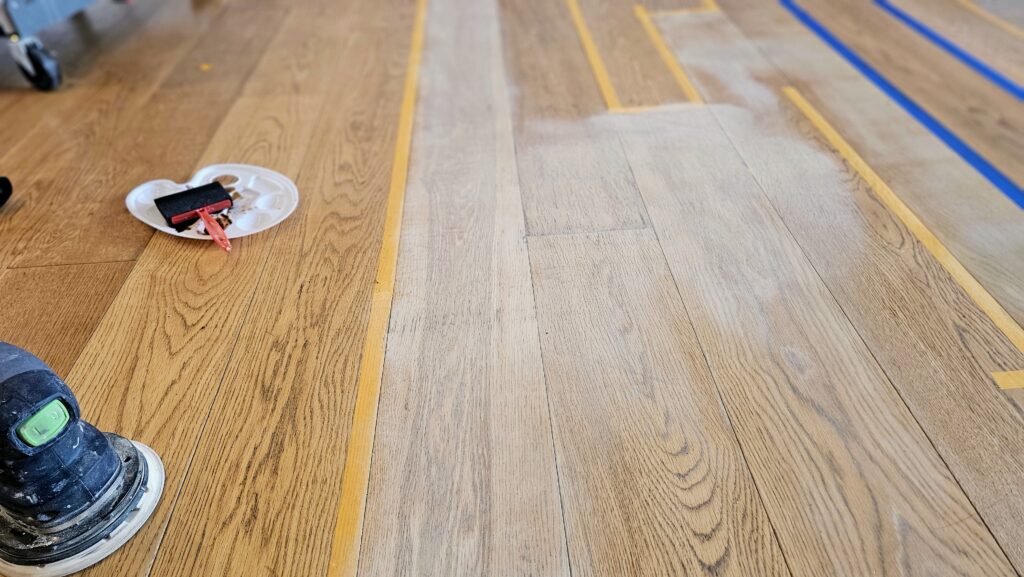
Process: Gradually blending the repair area so the colour transition looks natural.
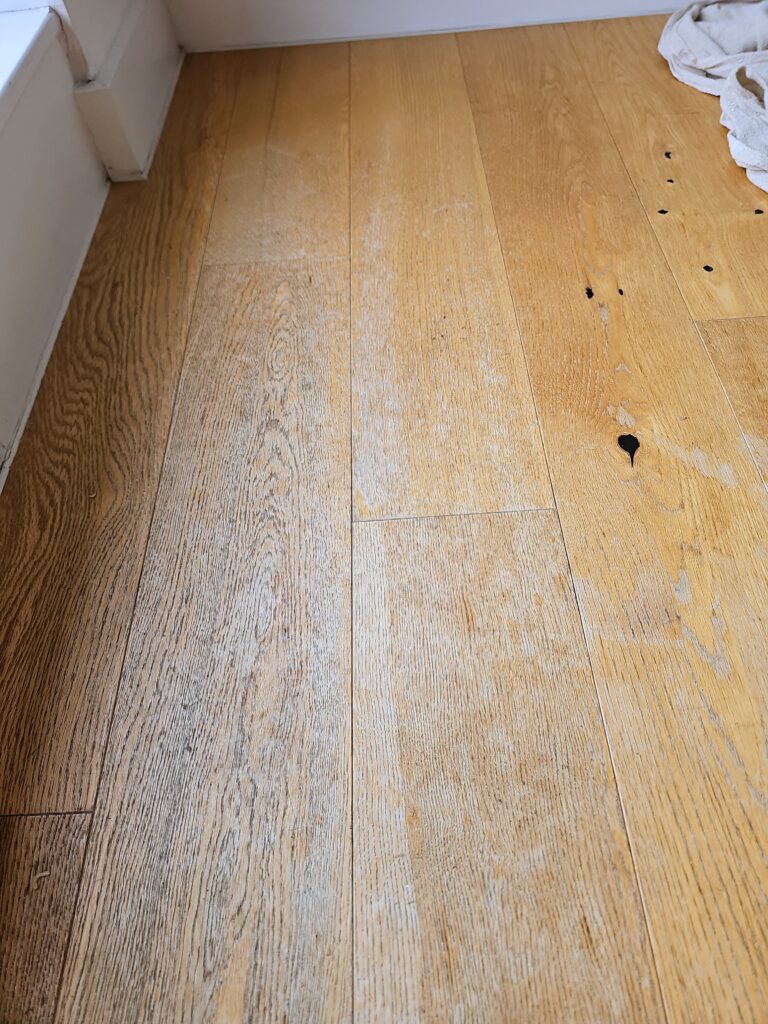
Additional issue: The boards near the balcony had faded from long-term sunlight, leaving the surface looking dry and pale.
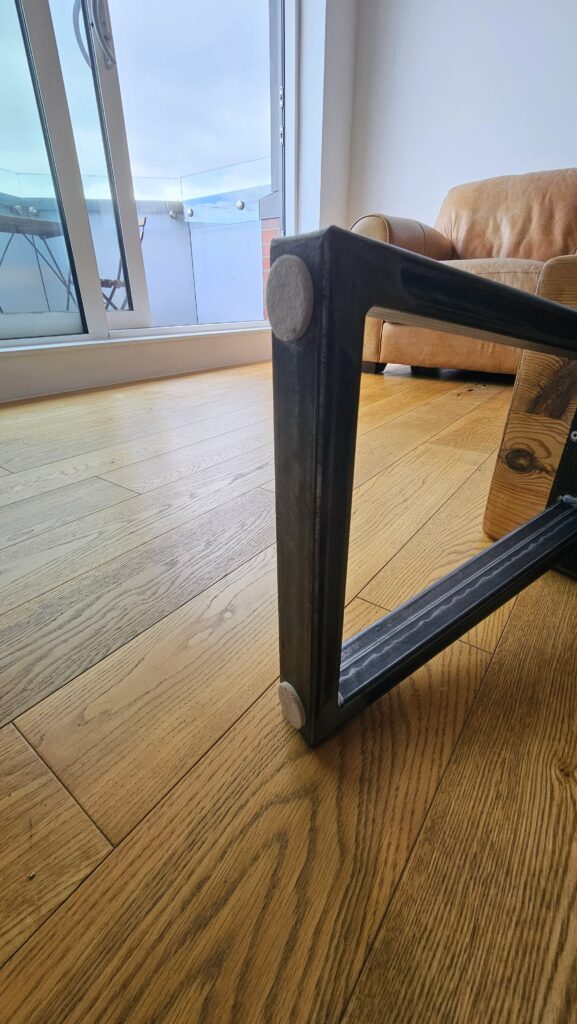
Prevention: New felt pads fitted to the table legs so the metal no longer contacts the timber floor.
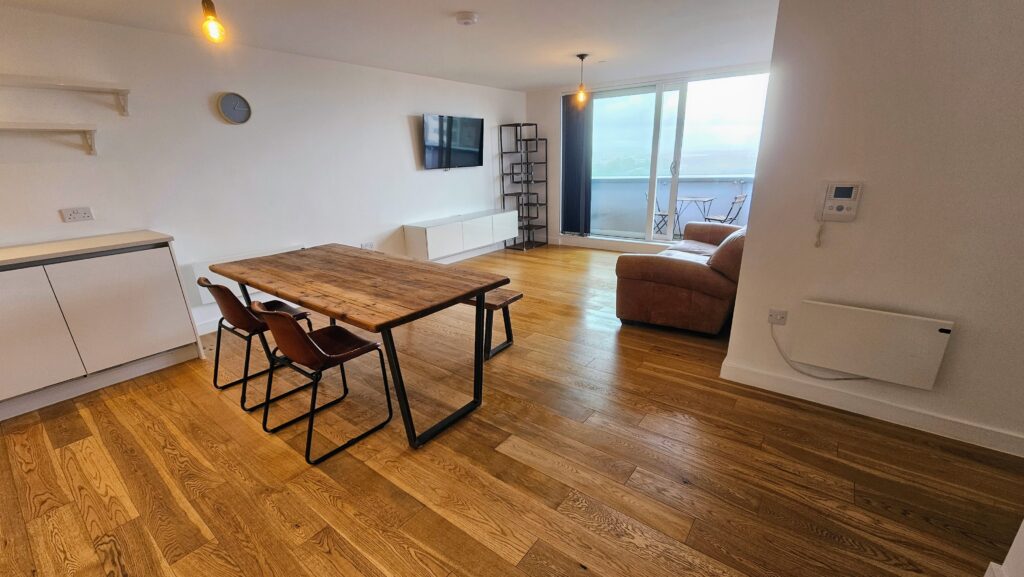
Solid wood floors are generally straightforward to sand and refinish, and can usually be done more than once. Engineered wood floors can also be sanded, but it depends on the wear layer thickness—as a rough guide, thicker wear layers (often around 3–6 mm) can tolerate sanding, while very thin veneers may not. When in doubt, I can check the floor construction and choose the safest option (full sand vs. abrade & recoat).